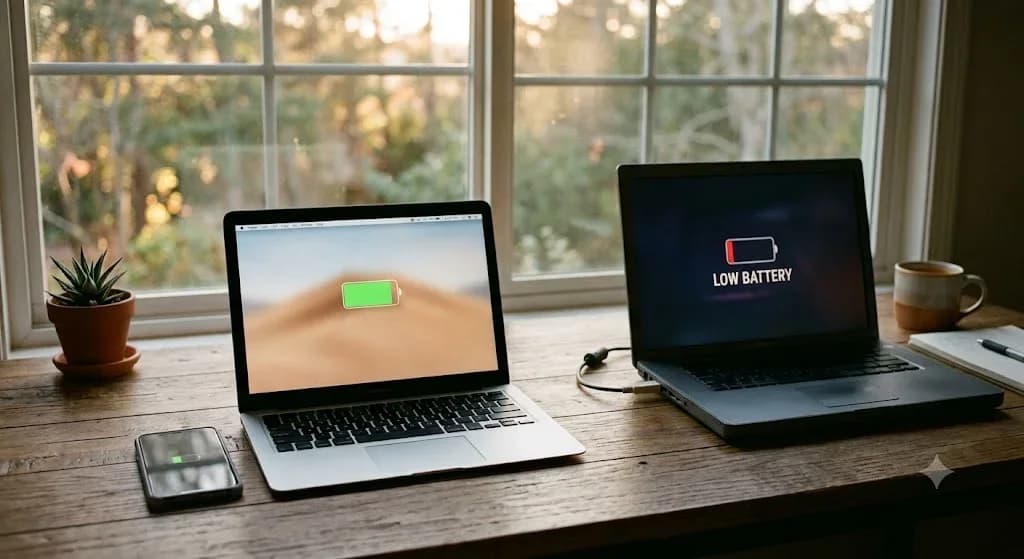
Why Your Phone and Your MacBook Outlast Every Other Laptop in the Room
Your phone lasts 18 hours. Your Windows laptop is hunting for an outlet by lunch. Your MacBook, oddly, behaves like your phone. Here's the chip philosophy behind why.
Your phone survives 18 hours of scrolling and gaming, then goes to bed at 10 percent. Your friend's Windows laptop, plugged in all morning, is already hunting for an outlet by lunch. Your MacBook, oddly, behaves more like your phone than like that Windows laptop, even though it's a full computer doing the same work.
Battery size and software optimization play a role, but a big piece of this comes down to one thing: the chip inside. There are two completely different philosophies for building a processor, and your phone and your MacBook happen to share the more efficient one.
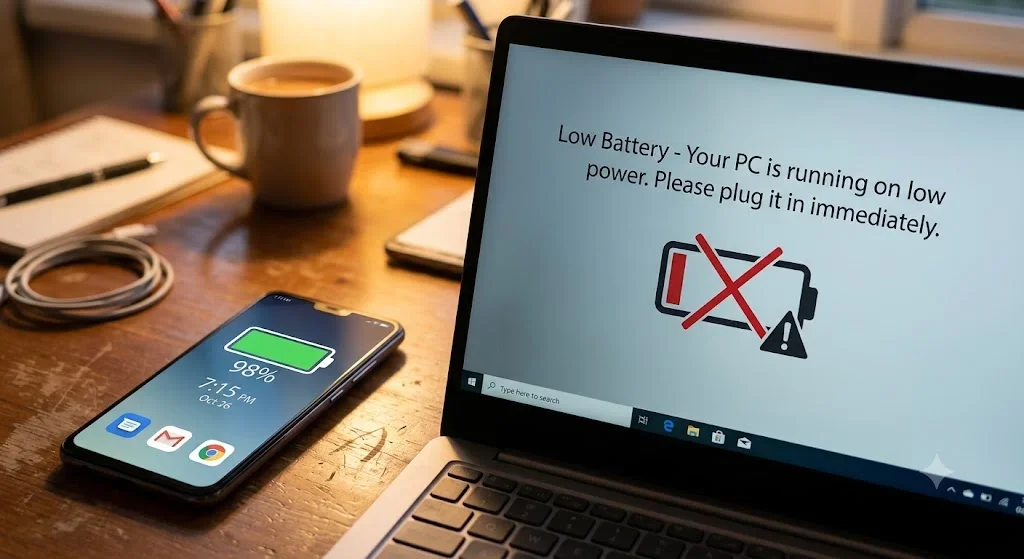
Two Ways to Get a Job Done
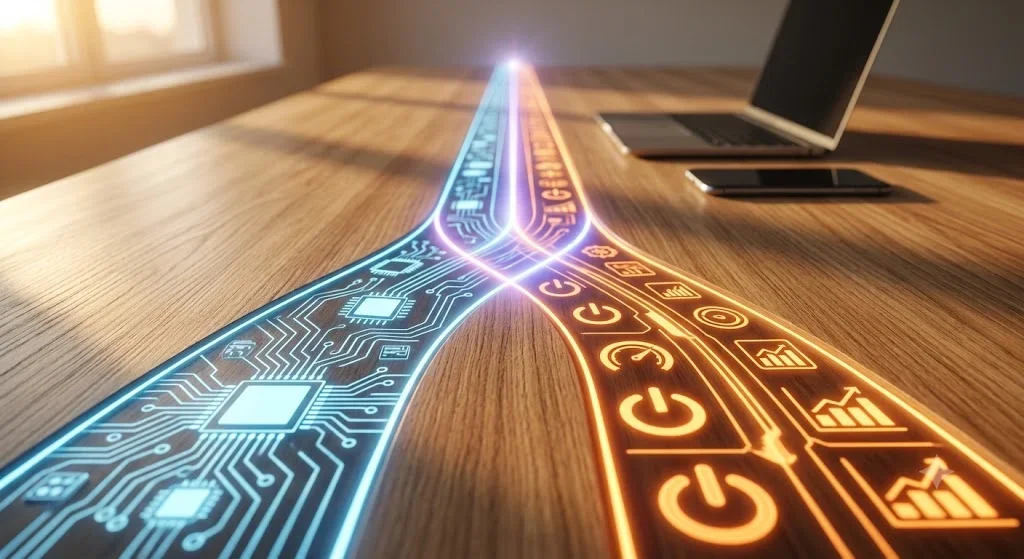
Picture two employees. One does everything in big, sweeping moves, handling every sub step of a task in one continuous motion, burning a lot of energy to power through it. The other only understands tiny, simple commands, firing off hundreds of small steps per second without breaking a sweat.
The first is CISC, Complex Instruction Set Computer. The second is RISC, Reduced Instruction Set Computer. This decades old split in chip design explains a lot of why some devices sip battery while others gulp it.
The Power-Hungry Camp
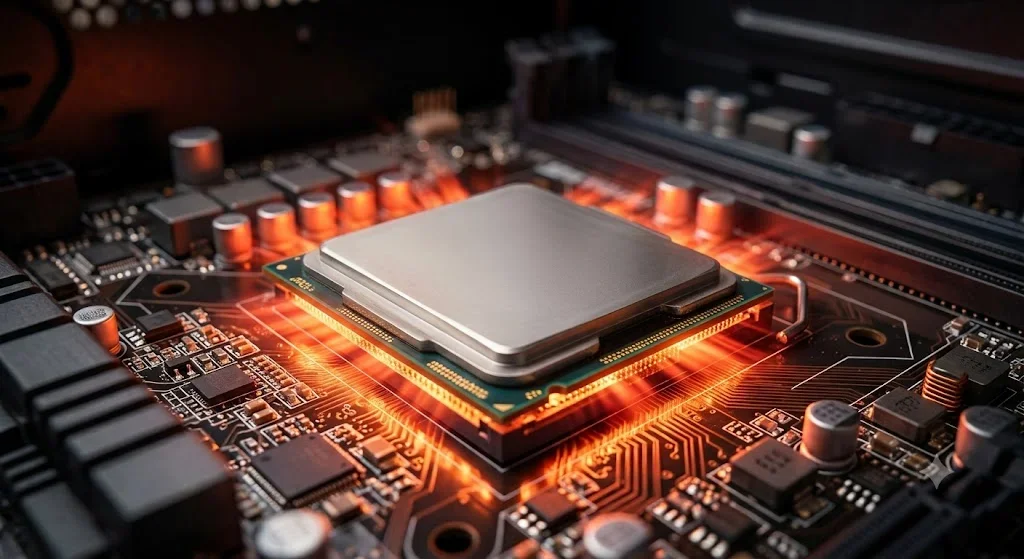
Intel and AMD build CISC chips on the x86 architecture that has powered most Windows laptops and desktops for years. Complex instructions push through heavy tasks in fewer overall steps, but handling them takes more circuitry and more heat. That's why a Windows laptop needs a bigger fan, runs warm, and needs charging by early afternoon. It's the tradeoff CISC has always made: raw power now, battery life later.
The Camp That Just Keeps Going
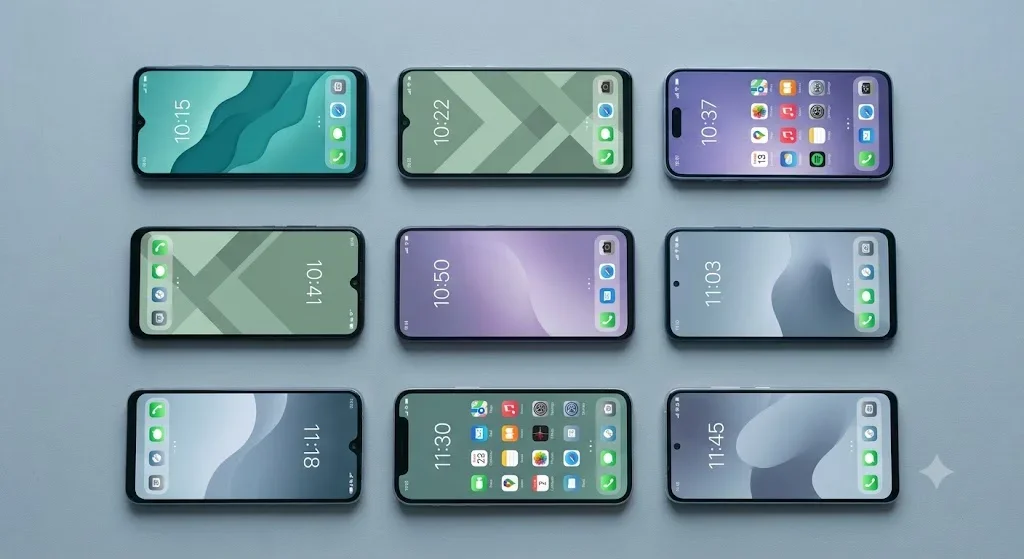
Phone makers went the opposite direction with RISC chips built on the ARM architecture. Qualcomm's Snapdragon chips power most Android flagships without turning your phone into a space heater. MediaTek's Dimensity chips do the same across the mid range and budget Android market worldwide. Samsung's Exynos chips follow the same playbook in some Galaxy phones. Small, simple instructions cost almost nothing in power, exactly what a device in your pocket all day needs.
Apple put that same phone logic inside a real computer, and that's the twist.
The MacBook Runs on Phone Logic

Apple ditched Intel and built its own RISC chips, Apple Silicon, for the Mac. A MacBook is a real PC. It edits video, compiles code, handles heavy multitasking, everything a Windows laptop does. But on battery it behaves like your phone, because under the hood it's the same chip philosophy scaled up. A MacBook Air on an M series chip lasts all day doing real work while a Windows laptop nearby is already looking for an outlet. The newest M5 and M5 Max chips hold their own against desktop grade processors from Intel and AMD while using a fraction of the power.
Qualcomm Takes the Fight to Windows
Apple proved RISC could run a full laptop. Qualcomm is now proving it can win on Windows too. The Snapdragon X series brought phone level efficiency to Windows laptops, and the newer Snapdragon X2 Elite has rattled the industry in 2026, beating Intel's latest chips on multi core workloads at the same power draw, and in some benchmarks even edging out Apple's M5.
The Takeaway
Your phone and your MacBook share the same efficient RISC bloodline. Most Windows machines are still running the older, hungrier CISC approach from Intel and AMD. The chip isn't the whole story behind battery life, but it's a bigger part of it than most people ever stop to consider. CISC still makes sense when you need maximum horsepower and total software compatibility, which is why gaming rigs and workstations lean on it. But the idea that a real computer has to guzzle power just to get work done is quietly dying, and your phone already showed everyone how it would happen.