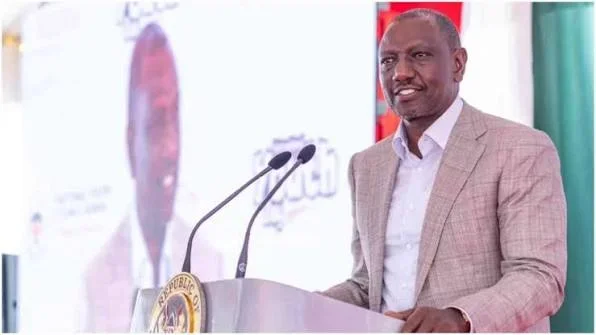
Ruto Faces Growing Criticism Over Controversial Pronouncements
President William Ruto is facing increased scrutiny over a series of public statements and policy directives that have sparked debate over how government decisions are communicated and implemented.
Nairobi, Kenya | September 11, 2026
President William Ruto has come under increasing scrutiny following a series of public statements and directives touching on foreign nationals, businesses, taxation, education and other matters of national interest.
Critics have questioned some of the President’s recent pronouncements, arguing that major policy decisions should be clearly defined and communicated through the appropriate government institutions to prevent confusion and uncertainty.
One of the latest controversies followed Ruto’s remarks targeting foreign nationals involved in small-scale businesses and hawking activities in Kenya. The comments raised concern among some foreign traders, particularly Burundian nationals, amid uncertainty over possible enforcement measures.
The government subsequently clarified its position, announcing a 90-day period for foreign business operators without the required documentation to regularise their immigration and business status. Officials also maintained that foreign nationals operating legally in Kenya would be protected.
The issue has since attracted legal attention, with a lawyer moving to court to challenge the enforcement of what he described as a presidential pronouncement targeting foreign nationals engaged in small businesses.
Ruto has faced similar scrutiny over other announcements and policy positions made by his administration. Some of the government’s statements have subsequently been clarified or adjusted, prompting debate over how policy decisions are communicated and coordinated.
Critics say the developments have raised questions about policy consistency and coordination within the administration. They argue that presidential announcements should be supported by clear legal and administrative frameworks before implementation.
Another controversial pronouncement involved Tata Chemicals Magadi, with Ruto publicly calling for the company to leave Kenya. The remarks generated debate over the legal and administrative procedures required to give effect to such a position.
Supporters of the President, however, argue that Ruto has demonstrated a willingness to address issues affecting ordinary Kenyans and take decisive action when necessary. They maintain that some of his pronouncements are intended to protect local businesses, strengthen compliance with Kenyan laws and promote the interests of citizens.
The growing debate comes as Kenya moves closer to the 2027 General Election, with the administration facing heightened political scrutiny over its record and policy decisions.
Ruto has continued to defend his government’s performance, pointing to investments and reforms in infrastructure, healthcare, education, agriculture and other sectors.
As political activity intensifies ahead of the 2027 polls, the President’s public statements and government directives are likely to remain under close public and political scrutiny.
The debate is increasingly placing emphasis on the need for clear communication, legal backing and coordinated implementation of government policies, particularly on issues with significant economic, legal and social implications.