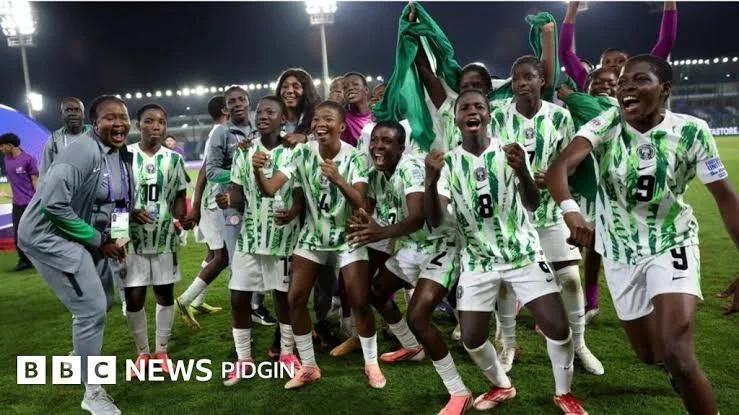
Nigeria Have the Last Laugh as Flamingos Beat Japan to Win U-17 World Cup
Nigeria's U-17 women's team defeated Japan 2-1 in the final to become the first African nation to lift the FIFA U-17 Women's World Cup, days after Japan eliminated Kenya in the Round of 16.
Nairobi, Kenya | November 8, 2026
Nigeria's Flamingos have made history after defeating Japan 2-1 in the final of the 2026 FIFA U-17 Women's World Cup in Morocco, becoming the first African nation to win the global competition.
The victory, secured on Saturday, November 7, at the Mohammed VI Football Complex in Rabat, marked a historic milestone for Nigerian and African women's football.
The triumph was particularly significant for African football, coming just days after Japan had ended Kenya's campaign in the Round of 16.
Nigeria produced a determined performance to overcome the Japanese side, with goals from Awawu Bashiru and Oluebube Umejiaku securing the historic victory.
The Flamingos took the lead in the 39th minute when Bashiru found the back of the net following a pass from Mary Dunstan. Her effort slipped through the hands of Japan goalkeeper Kou Kadowaki before crossing the goal line to give Nigeria a 1-0 advantage.
Nigeria returned from the break with renewed attacking intent and doubled their lead just two minutes into the second half.
Umejiaku capitalised on a well-weighted pass from Esther Stephen, controlling the ball before lifting it over the advancing goalkeeper to make it 2-0 in the 47th minute.
Japan refused to surrender and intensified their search for a comeback as the match progressed. Their efforts paid off in the 80th minute when Fuki Ito volleyed home after Anri Ito redirected a corner into her path.
The late goal set up a tense finish, with Japan pushing for an equaliser. However, Nigeria's defence remained organised to protect their advantage through the closing stages and secure the trophy.
The victory handed Nigeria their maiden FIFA U-17 Women's World Cup title and made them the first African country to win the tournament since its introduction in 2008.
The achievement also made Nigeria the first African women's national team to win a FIFA World Cup title at any level, marking a significant breakthrough for women's football on the continent.
Umejiaku, whose second-half strike proved decisive, was named Player of the Match. She also received the tournament's Golden Ball award in recognition of her outstanding performances throughout the competition.
Nigeria's triumph carried a special connection to Kenya's campaign, which had ended at the hands of Japan in the Round of 16 on October 29.
Kenya's Junior Starlets had taken an early lead against Japan through Brenda Achieng in the 29th minute, raising hopes of a major upset.
However, Japan responded through Mei Hanashiro in the 36th minute before Nanami Kurita put the Asian side ahead in the 59th minute. Asuka Tanaka added a third goal in the 75th minute to seal a 3-1 victory and send Kenya out of the competition.
Japan subsequently advanced through the knockout rounds, defeating their opponents to book a place in the final against Nigeria.
For Kenya's Junior Starlets, Nigeria's victory offered a measure of consolation after Japan ended their historic World Cup campaign in the Round of 16.
Although Kenya fell short of reaching the quarter-finals, their appearance at the tournament marked an important milestone for the country's youth women's football.
Their historic victory in Morocco has also strengthened Nigeria's reputation in youth football, with the country now celebrating success in both the boys' and girls' U-17 World Cup competitions.
For Nigeria, the 2-1 victory over Japan was more than a tournament triumph; it was a landmark achievement for the country and African women's football.