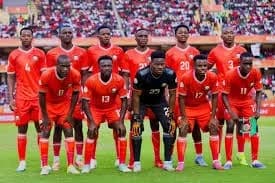
Harambee Stars Players Still Refuse to Train Despite Payment of Allowances
Harambee Stars players have reportedly remained dissatisfied despite the Ministry of Sports confirming payment of outstanding allowances, with the dispute now centred on the amounts received and how they were calculated.
Nairobi, Kenya | September 24, 2026
Harambee Stars players have reportedly continued their training boycott despite the Ministry of Sports confirming that outstanding allowances owed to the national team have been settled.
The standoff comes two days before Kenya’s opening 2027 Africa Cup of Nations Group D qualifier against Eritrea, scheduled for Saturday, September 26, at Nyayo National Stadium. Kenya is already guaranteed a place at the 2027 tournament as one of the three co-hosts alongside Tanzania and Uganda, with the qualifying campaign providing competitive matches ahead of the finals.
Sports Cabinet Secretary Salim Mvurya said on Thursday that the Ministry had honoured its financial commitments relating to previous Harambee Stars assignments in Zambia, South Africa and Turkey. The Ministry also said allowances for the Under-20 national team’s CECAFA assignment in Tanzania had been settled, alongside outstanding salaries for members of the Harambee Stars technical bench.
The payments, however, have not immediately resolved the dispute in the Harambee Stars camp. Players are reportedly questioning the amount they received compared with payments made to the Under-20 team for its recent assignment.
Figures circulating in connection with the dispute indicate that Harambee Stars players received about KSh62,400, while members of the Under-20 team reportedly received approximately KSh117,000. The figures have not been independently confirmed in the Ministry’s public statement, and the players are seeking clarification on how their allowances were calculated.
The latest disagreement follows reports that senior national team players declined to participate in training earlier in the week while demanding payment of outstanding allowances and raising concerns about their welfare.
Harambee Stars head coach Benni McCarthy has acknowledged the players’ frustrations, saying some members of the squad had attended four or five national-team camps without receiving promised allowances. He said the situation had made it difficult to manage players who had not been paid.
McCarthy has called for intervention from the Ministry of Sports, the Football Kenya Federation and other relevant authorities to resolve the dispute. He has also raised a separate concern over work permits for himself and members of his technical team, adding to the administrative issues surrounding the national side.
The Ministry, however, maintains that it has honoured its financial obligations relating to previous assignments. It has said any payments relating to subsequent engagements that remain pending are undergoing the required administrative processes in consultation with the Football Kenya Federation.
The allowance dispute has added pressure to Kenya’s preparations for the Eritrea fixture, although the match forms part of a qualifying campaign that Kenya is using to build and assess the team ahead of next year’s tournament. CAF lists Kenya’s opening Group D match against Eritrea for September 26, followed by an away fixture against Guinea in Conakry on October 1.
The disagreement has therefore shifted from whether previous payments were made to questions over the amounts received by individual players and the basis used to determine them.
With the Eritrea match approaching, attention is now focused on whether the players, FKF and government officials can resolve the dispute and restore normal training before the national team takes to the field at Nyayo National Stadium.
The outcome of the discussions will determine whether Harambee Stars can complete their preparations without further disruption as they begin their competitive campaign ahead of the 2027 AFCON finals.